

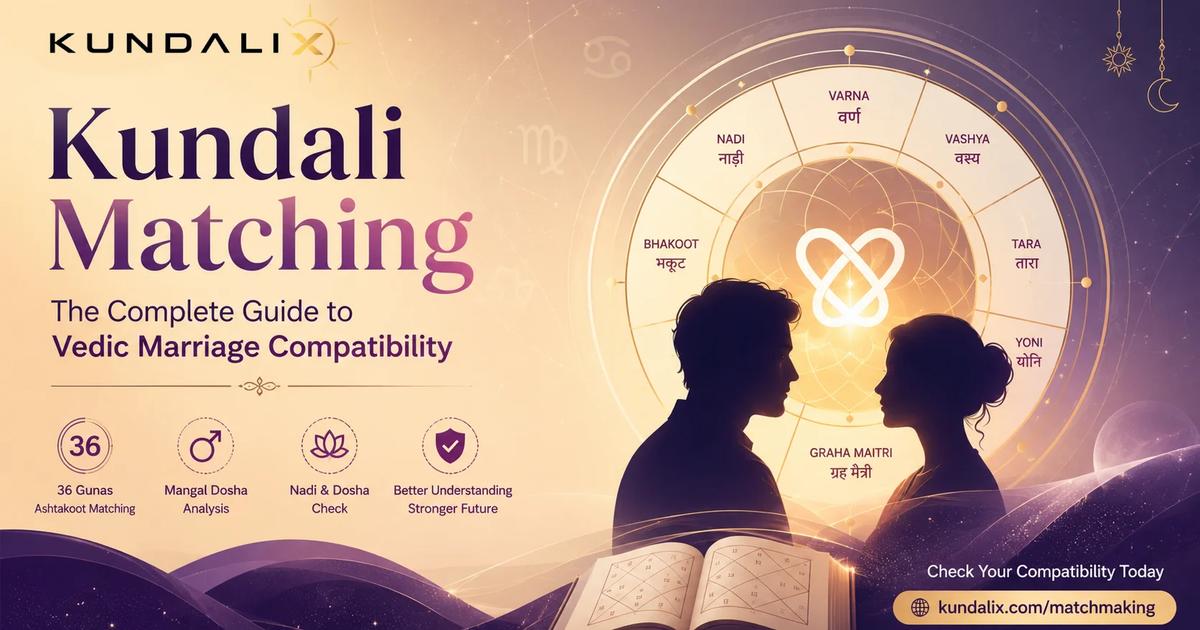
What Is Kundali Matching?
Kundali matching, also called Guna Milan or horoscope matching, is a traditional Vedic astrology method used to assess compatibility between two people before marriage. It compares the birth charts (kundalis) of a prospective bride and groom based on the position of the Moon at the time of their birth, evaluating eight distinct compatibility factors known as Ashtakoot.
For centuries, Indian families have relied on this system to understand whether two individuals are likely to build a stable, harmonious, and prosperous married life. While modern relationships also weigh personal compatibility, shared values, and communication, kundali matching remains a widely trusted first step in the marriage decision process — especially in arranged marriage traditions.
At Kundalix, we make this age-old process simple and accessible, combining traditional Vedic calculations with an easy-to-read digital report.
Why Kundali Matching Still Matters Today
Even as dating and courtship customs evolve, kundali matching continues to hold relevance for several reasons:
- Family and cultural trust: Many families use it as a shared reference point before formal introductions proceed.
- Early insight into compatibility patterns: It highlights areas of natural alignment or friction — temperament, health, finances, and progeny.
- Dosha detection: It flags planetary afflictions like Mangal Dosha (Manglik) or Nadi Dosha that couples may want to understand and address early.
- Peace of mind: For many, a favorable match score offers emotional reassurance before making a lifelong commitment.
It's worth noting that kundali matching is a tool, not a verdict. A lower score doesn't doom a relationship, and a high score doesn't guarantee one will succeed — it's meant to complement, not replace, personal compatibility.
The 8 Kootas (Ashtakoot) Explained
Guna Milan evaluates compatibility across eight parameters, totaling 36 points. Here's what each one measures:
KootaMax PointsWhat It MeasuresVarna1Spiritual and ego compatibilityVashya2Mutual control and dominance in the relationshipTara3Health, wellbeing, and general destiny alignmentYoni4Sexual and physical compatibilityGraha Maitri5Mental compatibility and intellectual connectionGana6Temperament and behavioral natureBhakoot7Love, family growth, and financial prosperityNadi8Health of offspring and genetic compatibility
How to Interpret the Score
- 18 points and above — Generally considered an acceptable match
- 24–32 points — A good to very good match
- 32+ points — An excellent match
- Below 18 points — Traditionally considered unfavorable, though astrologers often review deeper chart factors before ruling it out entirely
A raw number alone doesn't tell the full story. An experienced astrologer will also examine which specific kootas are weak, since a low score driven by a single serious factor (like Nadi Dosha) carries different weight than several minor shortfalls.
Understanding Mangal Dosha (Manglik Matching)
One of the most searched-for topics alongside kundali matching is Mangal Dosha, also known as Manglik Dosha. This occurs when Mars (Mangal) is placed in specific houses (1st, 2nd, 4th, 7th, 8th, or 12th) of a birth chart.
Common beliefs around Manglik matching:
- If both partners are Manglik, the effect is often considered neutralized.
- If only one partner is Manglik, astrologers may recommend remedies or further chart analysis before proceeding.
- Not all Manglik doshas carry equal intensity — the strength depends on the house, sign, and aspecting planets involved.
This is exactly the kind of nuance a full kundali reading captures that a basic guna score alone cannot.
Nadi Dosha and Why It's Treated Seriously
Nadi Dosha, worth 8 of the 36 points, is considered one of the most significant factors in matching because it's traditionally linked to genetic compatibility and the health of future children. When both partners fall into the same Nadi (out of Aadi, Madhya, and Antya), it's generally viewed as unfavorable — though many traditions offer exceptions based on rashi (moon sign) and nakshatra pada differences.
Kundali Matching vs. Modern Compatibility Checks
FactorKundali MatchingModern Compatibility ApproachBasisMoon sign, nakshatra, planetary positionsValues, communication, lifestyleFocusDestiny, health, temperament, prosperityEmotional connection, shared goalsBest usedBefore introductions/engagementThroughout the relationshipLimitationDoesn't measure personal chemistryDoesn't account for planetary influences
The most balanced approach many couples take today is using kundali matching as an early filter, then allowing personal compatibility to guide the final decision.
How to Get an Accurate Kundali Matching Report
For a meaningful match report, you'll need:
- Accurate birth details for both individuals — date, exact time, and place of birth
- A reliable ayanamsa system (most Vedic astrologers use Lahiri ayanamsa) for precise planetary calculations
- Dosha analysis, not just a guna score — Mangal Dosha and Nadi Dosha checks are essential
- Dasha period review to understand upcoming planetary phases that could affect married life
You can generate your free, detailed kundali matching report on Kundalix by entering both partners' birth details. Our matching engine calculates all 8 kootas along with Mangal Dosha and Nadi Dosha analysis in seconds.
Frequently Asked Questions
Is kundali matching scientifically proven? Kundali matching is based on Vedic astrological principles rather than empirical science. Many families use it as a cultural and traditional practice alongside personal judgment rather than as a sole decision-making tool.
What if our guna milan score is low? A low score doesn't automatically mean incompatibility. Astrologers often recommend a deeper chart analysis, since which specific kootas are weak matters more than the total number alone. Remedial measures are also commonly suggested.
Can Manglik and non-Manglik individuals marry? Yes, many do — often after specific remedies or rituals recommended by an astrologer, or after a deeper review shows the dosha's effect is mild.
How many points are needed for a good match? 18 out of 36 is traditionally the minimum threshold, with scores above 24 considered favorable.
Is kundali matching only for arranged marriages? No. Increasingly, couples in love marriages also check compatibility for cultural reassurance or to understand potential challenges ahead.
Final Thoughts
Kundali matching offers a time-tested framework for evaluating marital compatibility rooted in Vedic astrology. While it shouldn't be the only factor in a marriage decision, understanding your guna milan score, dosha status, and planetary alignment can offer valuable clarity — especially when combined with open communication and mutual understanding between partners.
Ready to check your compatibility? Generate your free kundali matching report on Kundalix.com today.
For a closer look at how horoscope compatibility plays out specifically in marriage decisions, read our detailed post on Kundali Matching for Marriage. You can also browse more articles like this on our astrology blog.
Related reading: Kundali Basics | Understanding Ayanamsa | Dasha Periods Explained